How Does PB Vision Calculate Speed?
How is ball speed calculated?
PB Vision estimates a shot's average speed by tracking the ball from paddle contact until it bounces or is volleyed, then using the distance traveled and elapsed time.
This is the average speed over that tracked flight. It does not represent the ball's peak speed or its speed at a specific moment, such as paddle contact or crossing the net.
Can speed and height predict an out ball?
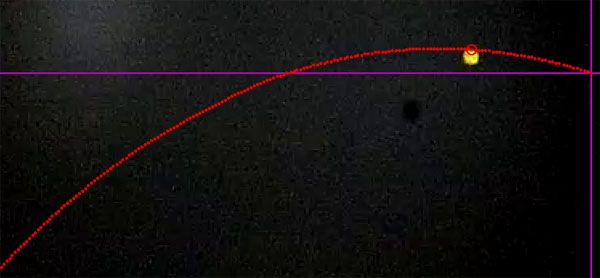
They can help identify shots to review, but there isn't one speed cutoff that guarantees a ball will land out at a given height. A ball rising through that height follows a different path from one already descending. Spin, air resistance, and the direction across the court also affect where it lands.
PB Vision reports average speed over the tracked flight. That is different from the ball's speed at paddle contact, at the net, or when it reaches the receiving player. A height measured at the net is also different from the same height measured at the kitchen line.
If a player volleys the ball, its eventual landing point was never observed. Estimating where it would have landed requires additional modeling and carries uncertainty. See PB Vision Stat Concerns for more about these limitations.
Further reading
For a deeper explanation, Crawford Lindsey's research on pickleball aerodynamics explores how drag and spin affect ball flight. The experiment tested launch speeds of 11–29 mph, so its results should not be treated as a universal speed threshold for harder drives.